
The Exodus Odisha Forgot: Why Lakhs Still Migrate for Survival

The Current Leadership Vacuum: CM Mohan Majhi’s Missing Blueprint
- Majhi’s government touts a ₹16.73 lakh crore investment vision for 2036, but labour migration is conspicuously absent from the core agenda.
- The “Utkarsh Odisha” summit promised 9 lakh jobs, yet rural distress migration continues unabated, with no district-level employment guarantees.
- No mention of labour cards, bonded labour rehabilitation, or migration monitoring mechanisms in the CM’s roadmap.
- While ministers discuss model villages and skill training, execution remains fragmented, and no budgeted action plan exists for migration-prone blocks.
Structural Failures Driving Migration
| Factor | Impact |
|---|---|
| Shrinking agriculture returns | 55–60% of rural income now depends on migration |
| Lack of irrigation & tech | Pushes seasonal unemployment |
| Unskilled workforce | 80% in informal sector, earning below minimum wage |
| No local industry | Youth forced to migrate for basic income |
| Policy neglect | Migration not integrated into economic planning |
Lakhs Still Migrate for Survival
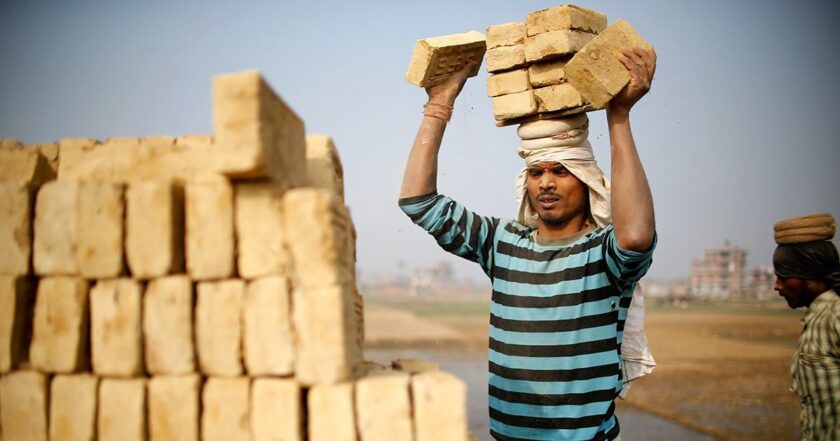
Despite decades of promises and plans, successive Odisha governments have failed to stem the tide of labour migration—leaving lakhs of workers to seek survival in distant states under exploitative conditions. The roots of this crisis lie in the entrenched Dadan system, a legacy of bonded labour cloaked in modern neglect. Today, under Chief Minister Mohan Majhi, the silence on economic security is deafening.
Blueprints, Not Blame: Ending the Dadan Cycle
“The solutions do not lie in sloganeering, blame games, or political grandstanding. Odisha needs a practical, time-bound blueprint that integrates skill development, local employment generation, and district-level migration monitoring,” says Dr. Satya Brahma, Editor-in-Chief of Network 7 Media Group
He adds, “We must move beyond tokenism and create a robust framework that empowers workers at the grassroots. The Dadan system can only be dismantled through coordinated policy execution, not rhetorical optics.”
Despite decades of promises and plans, successive Odisha governments have failed to stem the tide of labour migration—leaving lakhs of workers to seek survival in distant states under exploitative conditions. The roots of this crisis lie in the entrenched Dadan system, a legacy of bonded labour cloaked in modern neglect. Today, under Chief Minister Mohan Majhi, the silence on economic security is deafening.
Historical Context: The Dadan System
- Originated in Western Odisha, notably Balangir, Bargarh, Kalahandi, and Nuapada, where seasonal poverty and agrarian collapse forced rural workers into informal contracts.
- Middlemen known as Sardars or Khatadars recruited labourers with advance payments, binding them to work in brick kilns, construction sites, and hazardous industries across Andhra Pradesh, Tamil Nadu, and Karnataka.
- The Orissa Dadan Labour (Control & Regulation) Act, 1975 was enacted but remained largely unenforced. It was later repealed by the Inter-State Migrant Workmen Act, 1979, which also failed to protect workers effectively.
Policy Paralysis Across Regimes
- BJD-era governments (1999–2024) acknowledged distress migration but failed to implement structural reforms. Schemes like MGNREGS and skill training were underfunded or poorly targeted.
- 403 migrant deaths reported in a decade, with Ganjam, Kalahandi, and Balangir topping the list.
- Despite multiple task forces and committees, no State Migration Policy was ever fully operationalized.
- Post-COVID reintegration promises were abandoned, leaving returning migrants without jobs or safety nets.
 The Masterstroke of Moditva: Why Mohan Majhi Eclipsed the Heavyweights in Odisha
  Berhampur’s Thirst: A City Caught Between Crisis and Reform
  Leslie Tripathy Ushers in the 14th Annual India Leadership Conclave & Power Brand Awards 2025
  Gopalpur Gang Rape: A Crime That Shattered Odisha’s Conscience — And the BJP Government’s Credibility
  Is the Biju Janata Dal Imploding? A Party at War with Its Own Legacy!
  Cabinet Reshuffle Looms as Odisha CM Majhi Meets BJP Top Brass in Delhi