Sacrificial Bureaucracy: Centre Replaces Education Secretary To Deflect From Demands For Dharmendra Pradhan’s Resignation?
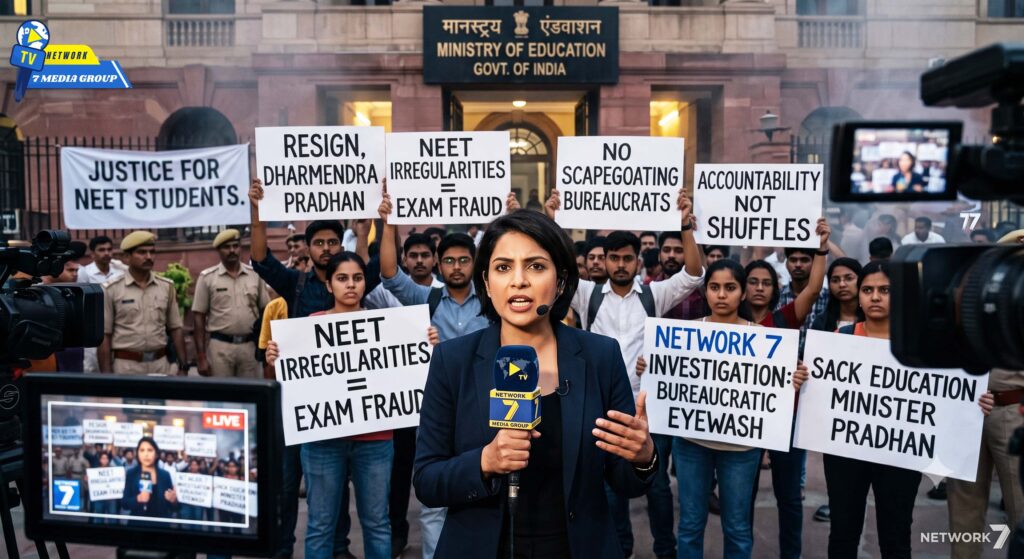
Shifting Top Bureaucrats Amid NEET Irregularities Crisis Exposed as a Calculated Administrative Eyewash to Shield Political Leadership
NEW DELHI — In a swift late-night administrative maneuver, the Appointments Committee of the Cabinet (ACC) announced a major bureaucratic reshuffle, removing Vineet Joshi as Secretary of the Department of Higher Education and replacing him with 1994-batch Rajasthan cadre IAS officer Naresh Pal Gangwar.
While officially framed as a routine executive posting, political analysts, student bodies, and opposition critics view the move as a direct, tactical “eyewash”. The sudden removal of top leadership within the Ministry of Education appears designed to absorb the fallout of massive national protests over alleged examination paper leaks, thereby insulation Union Education Minister Dharmendra Pradhan from mounting calls for his resignation.
Key Highlights of the Bureaucratic Transfer
- Outgoing Secretary: Vineet Joshi (1992-batch Manipur cadre IAS officer), who served as Higher Education Secretary and oversaw critical national examination frameworks, has been abruptly transferred out of the Ministry of Education to serve as Secretary in the Ministry of Panchayati Raj.
- Incoming Secretary: Naresh Pal Gangwar, previously Secretary of the Department of Animal Husbandry and Dairying, has been handed immediate charge of the Higher Education portfolio.
- Political Context: The reshuffle follows sustained nationwide demonstrations and hunger strikes over alleged systemic failures and paper leaks in competitive examinations, including NEET-UG.
The Anatomy of an Executive Deflection
For weeks, student organizations, civil rights groups, and opposition parliamentarians have centered their accountability demands not on administrative staff, but directly at the cabinet level—demanding the immediate resignation of Education Minister Dharmendra Pradhan.
By sacrificing senior civil servants, the administration relies on a classic political playbook:
| Mechanism of Deflection | Strategic Objective | Public / Political Reality |
| Bureaucratic scapegoating | Reframe systemic policy and institutional failures as individual administrative oversights. | Shifts the public spotlight from ministerial accountability to civil service execution. |
| Piecemeal procedural reforms | Signal immediate government action via high-profile transfers and designated fast-track courts. | Fails to address core political responsibility or restore institutional trust in national testing bodies. |
| Preserving cabinet leadership | Prevent political damage to ministerial leadership ahead of ongoing parliamentary sessions. | Widens the trust deficit between student activists demanding ministerial resignation and executive leadership. |
Structural Failure vs. Bureaucratic Replacement
“Changing the Secretary level leadership while keeping the political custodians intact is an optical illusion of accountability. A transfer order does not fix systemic vulnerability, nor does it absolve political leadership of ultimate oversight.”
The National Eligibility cum Entrance Test (NEET) ecosystem operates under complex institutional guidelines. Transferring an IAS officer—who executes policy—without addressing ministerial oversight or structural vulnerabilities in testing agencies like the NTA underscores the cosmetic nature of the government’s response.
As protests continue outside government offices, the replacement of Vineet Joshi with Naresh Pal Gangwar highlights an administrative truth: until political accountability is established at the ministerial level, reshuffling civil servants remains an optics-driven attempt to weather the storm rather than solve the crisis.
In July 2026, senior IAS officer Naresh Pal Gangwar was appointed as Secretary of the Department of Higher Education. His posting coincided with an investigative revelation regarding government subsidies amounting to over ₹1.16 crore disbursed to his immediate family members.
The funds were granted under the National Horticulture Board (NHB) scheme—titled “Development of Commercial Horticulture through Production and Post-Harvest Management”—run by the Union Ministry of Agriculture. While no formal criminal charge or corruption FIR has been registered against Gangwar, the findings have drawn critical political and administrative scrutiny regarding conflict of interest, disclosures in asset filings, and ethics in public governance.
Key Findings & Scheme Discrepancies
investigative records from public scheme disclosures highlight the following details regarding the subsidy allocations:
1. Disbursement to Immediate Family
Over a period of five years, three members of Gangwar’s family received central subsidies for commercial cucumber farming in Jaipur district, Rajasthan:
- Mother (Bindumati): Received ₹46.03 lakh in January 2025 for a commercial project costing ₹99.38 lakh in Bhasingpura village, Jaipur. At the time, Gangwar served as Additional Secretary in the Union Ministry of Environment, Forest & Climate Change.
- Son (Kumar Writwik): Received ₹46.49 lakh in March 2023 for a project valued at ₹97.94 lakh in Dhani Boraj village.
- Wife (Dr. Ranjita Singh & Others): Received ₹24.36 lakh in 2021–22 for a project costing ₹49.31 lakh in Dhani Boraj village. The application process commenced in May 2020 while Gangwar was serving as Agriculture Production Commissioner & Principal Secretary in the Rajasthan State Government.
2. Disclosures in Annual Property Returns
- In his mandatory Annual Immovable Property Returns submitted to the Department of Personnel and Training (DoPT) for 2021–22, Gangwar disclosed only one project approved under the scheme, listing the owners’ contribution sourced from personal savings.
Gangwar’s Official Defense & Stand
In response to queries regarding the disclosures and family benefits, Gangwar defended his compliance with administrative norms:
“Rule 2(b) of the All India Services (Conduct) Rules, 1968 defines a ‘Member of Family’ as individuals wholly dependent on the Government Servant. My mother and my son are not financially dependent on me, as explicitly mentioned in my official service records.”
He further maintained that All India Services rules mandate declaring large-scale for-profit projects in specific contexts, and that his family members applied for and accessed scheme benefits as independent cultivators through standard, legitimate procedures.
Public & Political Reactions
The revelations triggered significant debate among policy analysts and public representatives:
- Questions Over Conflict of Interest: Critics highlighted that the subsidies were processed and approved during periods when Gangwar held crucial regulatory and agricultural policymaking roles at both state and central levels.
- Relevance to Current Posting: The timing of his appointment as Higher Education Secretary—amid heightened public demand for administrative transparency and institutional reform—has intensified political commentary on standards of accountability for senior bureaucrats.
Fact Sheet: Legal & Career Status
| Parameter | Details |
| Formal CBI / ACB Charges | None. No formal corruption cases, chargesheets, or criminal investigations have been initiated by federal or state enforcement agencies. |
| Primary Allegation | Ethical oversight, potential conflict of interest, and non-disclosure of complete family subsidy benefits in property filings. |
| Current Administrative Status | Active duty as Secretary, Department of Higher Education (Ministry of Education, GoI). |
 Where Is Gyanesh Kumar Now? The Constitutional Eclipse at Nirvachan Sadan
  India’s 10 Core Economic Engines: An Empirical Breakdown of Growth, Jobs, Trade, and FDI
 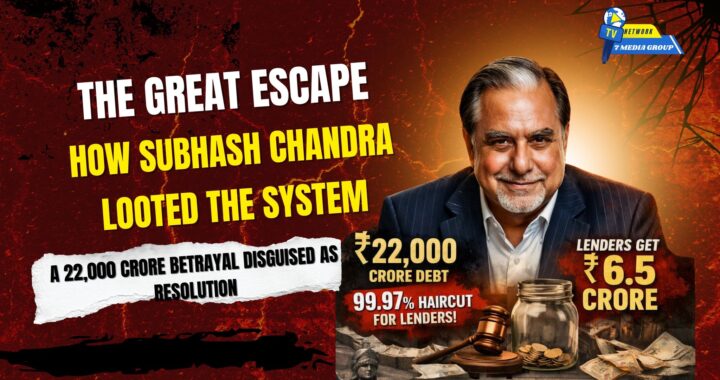 The 3-Paise Settlement: How India’s Financial Architecture Capitulated to Subhash Chandra’s ₹22,000-Crore Default
 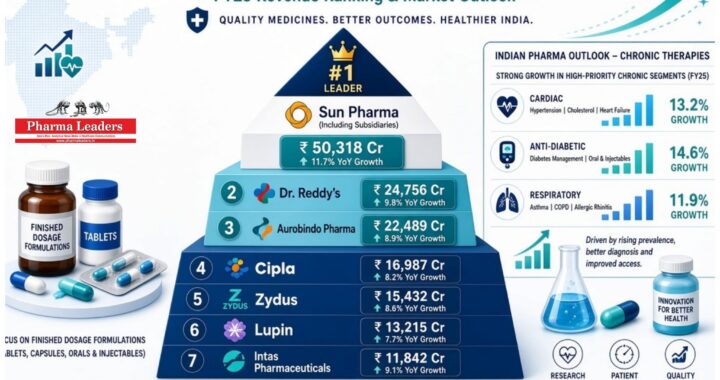 Top 50 Entrepreneurs in Pharmaceutical Industry Powering the Global Medicine Chest
 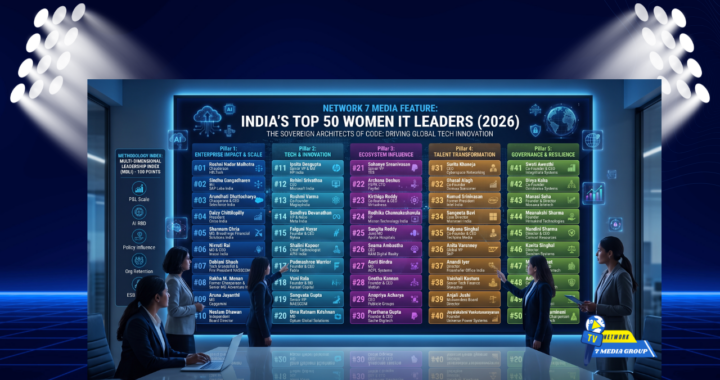 The Sovereign Architects of India’s Digital Century: Top 50 Women IT Leaders
  4.3 Crore Indians Stranded in Unemployment as Youth Crisis Deepens – Network 7 Research Findings