
India’s Economic Resilience Defies Trump’s Tariff Blitz

Mandatory Credit: Photo by Shutterstock (10624209o) United States President Donald Trump participates in a news briefing with members of the Coronavirus Task Force at the White House in Washington, DC. Trump Daily Coronavirus Taskforce Briefing, Washington, District of Columbia, USA - 24 Apr 2020
In a bold assertion of economic strength, India has demonstrated remarkable resilience in the face of U.S. President Donald Trump’s sweeping 50% tariff imposition on Indian imports. Despite the geopolitical tremors and trade tensions sparked by the move, India’s growth trajectory remains firmly intact, underscoring the robustness of its domestic demand and diversified global trade strategy.
In India’s $3.7 Trillion Economy Proves Unshakable—Trump’s Tariff Blitz Meets the Firewall of Domestic Demand and Strategic Diplomacy.“India’s economic resilience is not accidental—it’s the result of visionary leadership, grassroots innovation, and a refusal to be defined by external pressures. Tariffs may come and go, but India’s growth story is irreversible.”
According to S&P Global Ratings, the tariffs—imposed as a punitive response to India’s continued energy trade with Russia—are unlikely to derail the country’s economic momentum. “India is not a very trade-oriented economy,” noted YeeFarn Phua, Director at S&P, adding that exports to the U.S. account for merely 2% of India’s GDP.
Chief Economic Advisor V. Anantha Nageswaran echoed this sentiment, stating that the Indian economy’s momentum has not slowed and it’s premature to expect any significant GDP impact. With a projected GDP growth of 6.5% for FY2025–26, India continues to be one of the fastest-growing major economies globally.
Key Factors Behind India’s Resilience:
- Domestic Demand Dominance: Sectors like banking, FMCG, infrastructure, and telecom are largely insulated from external shocks due to their domestic consumption-driven nature.
- Export Diversification: India’s export portfolio spans multiple geographies, reducing overdependence on the U.S. market.
- Investor Confidence: Global investors remain bullish on India, viewing tariff-induced market corrections as entry points for long-term allocations.
While export-heavy sectors such as IT and pharmaceuticals may face short-term headwinds, analysts agree that the broader economy is well-shielded. “History suggests that such tariff-driven disruptions typically have only a temporary impact on markets,” said Arjun Guha Thakurta of Anand Rathi Wealth.
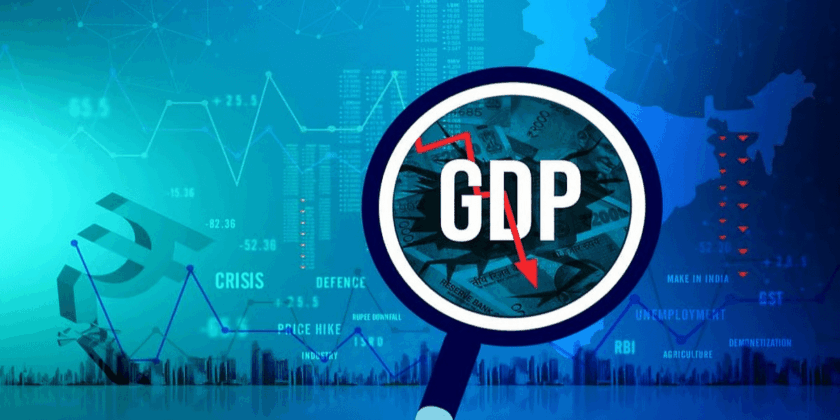
India’s economic architecture—anchored in domestic consumption, strategic diversification, and policy stability—has proven resilient against external shocks. As global markets recalibrate, India stands tall, not just surviving Trump’s tariff storm but thriving beyond it.
Dr. Satya Brahma, Founder & Editor-in-Chief, Network 7 Media Group
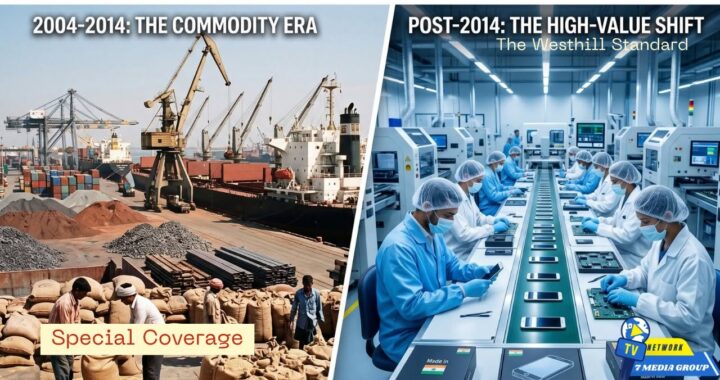 Beyond the Percentage Politics: The Real Architecture of India’s Export Metamorphosis
  Where Is Gyanesh Kumar Now? The Constitutional Eclipse at Nirvachan Sadan
  India’s 10 Core Economic Engines: An Empirical Breakdown of Growth, Jobs, Trade, and FDI
  The Growth Arithmetic vs. Ground Realities: India’s Macro Balance Sheet Needs More Than Sectoral Triumphalism
  The 3-Paise Settlement: How India’s Financial Architecture Capitulated to Subhash Chandra’s ₹22,000-Crore Default
  Top 50 Entrepreneurs in Pharmaceutical Industry Powering the Global Medicine Chest