
Mamata vs ED: Bengal’s Political Theatre Moves from I-PAC Raid to Supreme Court Showdown

- From Raid to Resistance: Mamata Banerjee storms I-PAC office, accuses ED of seizing TMC’s election strategy documents.
- Courtroom Clash: ED alleges obstruction and removal of evidence; Mamata files caveat to block unilateral orders.
- Vendetta or Defiance? The confrontation exposes the deepening fault lines between the Modi government and Bengal’s ruling TMC.
The Trigger: ED Raids on I-PAC
On January 8, 2026, the Enforcement Directorate (ED) raided the Kolkata office of the Indian Political Action Committee (I-PAC) and the residence of its chief, Pratik Jain, as part of a probe into alleged coal scam money laundering. The ED claimed funds from the scam were routed through hawala channels to support TMC’s campaigns.
Mamata Banerjee, West Bengal’s Chief Minister, arrived at the I-PAC office mid-operation. Eyewitnesses reported her leaving with files and hard disks, which she later admitted contained sensitive party data, including candidate lists for the 2026 Assembly polls.
The Aftermath: Courtroom Escalation
The ED accused Banerjee of obstructing justice and “removing crucial evidence”. In response, Banerjee filed a caveat in the Supreme Court to ensure no adverse orders could be passed without hearing her side. The agency has petitioned the apex court under Article 32, alleging interference in its probe.
Political Fallout
Banerjee denounced the raids as “political vendetta” orchestrated by Union Home Minister Amit Shah. She accused the ED of attempting to “loot” her party’s strategy and intimidate Bengal’s ruling establishment. The BJP counters that Banerjee’s intervention was an unconstitutional act of defiance, undermining central agencies.
Objective Analysis
- Political Vendetta Argument: The timing of the raids, coinciding with TMC’s election preparations, lends weight to claims of targeted intimidation.
- Defiance Argument: Banerjee’s act of personally intervening in an ongoing raid is unprecedented, raising questions about executive overreach and her determination to shield party data.
- Institutional Stakes: The Supreme Court’s eventual ruling will determine whether this episode is seen as a misuse of central agencies or a Chief Minister’s unlawful obstruction.
Dr. Satya Brahma, Editor-In-Chief of Network 7 Media Group says “What unfolded at the I-PAC office is not just a raid—it is a collision of power narratives. Mamata Banerjee’s defiance reflects her refusal to let Bengal’s political sovereignty be dictated by Delhi. Yet, the ED’s move to the Supreme Court signals that this battle is no longer about files and hard disks, but about the sanctity of institutions. The verdict will shape whether India’s democracy is seen as resilient or compromised by vendetta politics.”
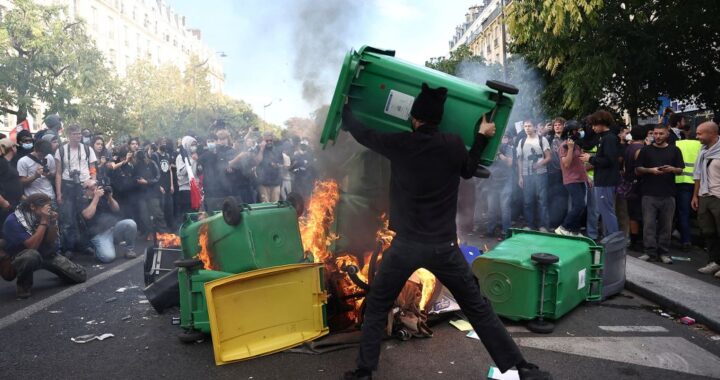 France on the Brink: When Public Anger Becomes a Crisis of the State
  Beyond the Percentage Politics: The Real Architecture of India’s Export Metamorphosis
  Network 7 Media Group Announces the 15th Annual India Leadership Conclave & Power Brand Awards 2026: “Lead or Follow: The New Architecture of Disruption”
  Where Is Gyanesh Kumar Now? The Constitutional Eclipse at Nirvachan Sadan
  India’s 10 Core Economic Engines: An Empirical Breakdown of Growth, Jobs, Trade, and FDI
  The 3-Paise Settlement: How India’s Financial Architecture Capitulated to Subhash Chandra’s ₹22,000-Crore Default