The Masterstroke of Moditva: Why Mohan Majhi Eclipsed the Heavyweights in Odisha
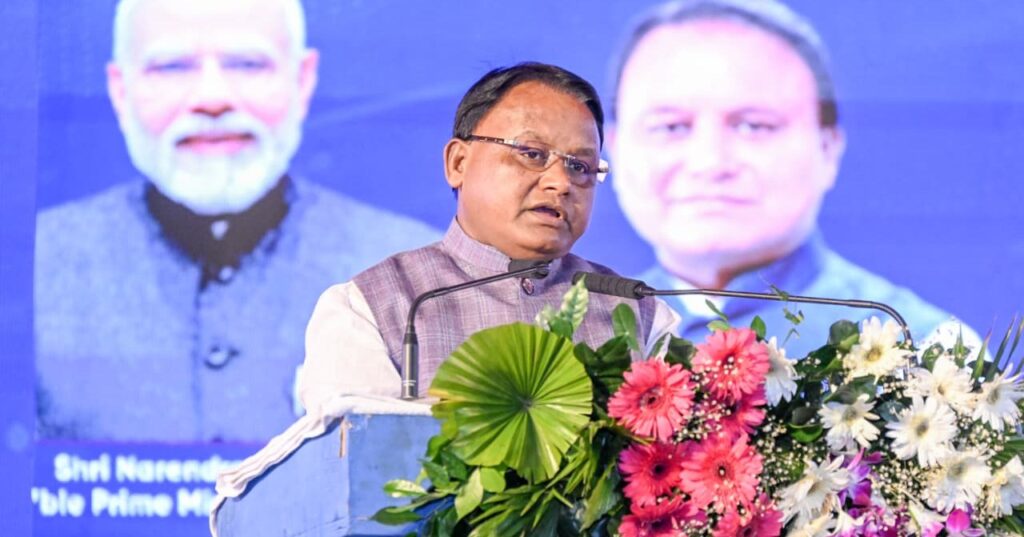
In the high-stakes theater of Indian politics, the Bharatiya Janata Party (BJP) has often been called a “party of surprises.” Yet, few decisions in recent history have sent as many shockwaves through the Lutyens’ Delhi corridors and the streets of Bhubaneswar as the elevation of Mohan Charan Majhi to the office of Chief Minister.
By choosing a son of a security guard and a four-time MLA from Keonjhar over seasoned titans like Dharmendra Pradhan, Jay Panda, and Aparajita Sarangi, Prime Minister Narendra Modi and Home Minister Amit Shah didn’t just pick a leader; they redefined the political grammar of Odisha.
The “Why Not” the Heavyweights?
To understand Majhi’s rise, one must first look at the shadows cast by the giants who were left behind.
- Dharmendra Pradhan: Long considered the architect of BJP’s growth in Odisha, Pradhan’s presence in the Union Cabinet remains indispensable for the party’s national education and skill-building agenda. Insiders suggest that moving Pradhan to the state would have created a vacuum in New Delhi that the BJP wasn’t ready to fill.
- Baijayant ‘Jay’ Panda & Aparajita Sarangi: Both carry immense intellectual weight and national profiles. However, their perceived “elite” or “bureaucratic” backgrounds allegedly contrasted with the BJP’s 2024 narrative of Odia Asmita (Odia Pride)—a movement built on the grassroots, the rural, and the marginalized.
- Manmohan Samal: Despite his veteran status, his electoral loss in the Assembly polls significantly weakened his claim to the top post in a party that rewards winning streaks.
The Tribal Trump Card
The most potent factor in Majhi’s selection is his identity. Following the appointment of Droupadi Murmu as India’s first tribal President, the BJP sought to cement its bond with the Scheduled Tribes (ST) community, which constitutes nearly 23% of Odisha’s population.
Mohan Majhi, a member of the Santal tribe, represents a demographic that was once the backbone of Naveen Patnaik’s BJD. By placing a tribal leader in the Chief Minister’s chair, the Modi-Shah duo has effectively “locked” the tribal vote bank, making it exceedingly difficult for the opposition to reclaim its lost ground.
A Clean Slate and RSS Roots
Unlike the heavyweights, who often come with their own factions and political baggage, Mohan Majhi offered a “Clean Slate.” Zero Factionalism: Majhi does not command a “camp,” making him the ideal candidate to unite the state unit without triggering ego clashes among the seniors.
- The RSS Connection: Having served as a Guruji in a Saraswati Shishu Mandir (an RSS-affiliated school), Majhi’s ideological core is unwavering.2 This background ensures a seamless alignment between the state government’s actions and the Sangh’s long-term vision for Odisha.
The Message to the Cadre
The selection of Majhi is a powerful psychological signal to the average Karyakarta (worker). It screams that in Modi’s BJP, a Sarpanch-turned-MLA can become the Chief Minister. It replaces “pedigree” with “performance” and “proximity” with “potential.”
While critics initially labeled him a “surprise choice” or a “dark horse,” Majhi’s first year in office has shown a leader who is comfortable in his skin—focusing on transparency in mining, tribal rights, and the direct delivery of central schemes.
Network 7 Analysis: The “Double Engine” Reality
By choosing Majhi, the BJP central leadership has ensured that the “Double Engine” government stays firmly under the guidance of New Delhi. While Majhi handles the grassroots, the heavyweights like Pradhan and Panda continue to provide the national scaffolding.
In the end, the story of Mohan Majhi is not just about a man becoming Chief Minister; it is about the BJP’s clinical ability to prioritize demographic dividends over individual stardom.
Building on our initial analysis for Network 7 Media Group, we dive deeper into the fallout of this transition. If Mohan Majhi was the “surprise” that won the first battle, his first year in power has ignited a silent but ferocious structural war within Odisha’s political landscape—forcing the Biju Janata Dal (BJD) into a radical reinvention.
The Majhi Effect: How the BJP’s ‘Common Man’ Strategy Forced a BJD Reboot
The first year of the Mohan Charan Majhi administration has been more than a change in leadership; it has been a systematic dismantling of the “Naveen Model.” For 24 years, Odisha was governed by a sophisticated, bureaucrat-led machinery that operated with a sense of clinical distance. Today, Majhi’s “People’s Government” has forced the BJD to look into a mirror and ask a difficult question: Has it lost its soul to its own system?
1. Dismantling the ‘Bureaucratic Fortress’
The BJD’s 2024 defeat was largely attributed to the “Pandian Factor”—the perception that elected MLAs had become secondary to high-profile bureaucrats.
- The Majhi Strike: Upon taking office, Majhi immediately reopened the CM’s Grievance Cell, which had been effectively dormant for years. By traveling to remote districts and sitting on a plastic chair to hear commoners, Majhi highlighted the BJD’s greatest vulnerability: accessibility.
- BJD’s Pivot: Naveen Patnaik has responded by ordering a massive decentralization of party power. The BJD is now aggressively promoting its second-tier regional leaders, trying to shed the image of a “two-man party” and reclaiming its roots as a grassroots movement.
2. The Battle for ‘Odia Asmita’ (Pride)
Majhi’s government moved with surgical precision to claim the cultural high ground:
- Temple Politics: The reopening of all four gates of the Puri Jagannath Temple and the long-awaited audit of the Ratna Bhandar (temple treasury) were not just administrative acts; they were symbolic blows to the BJD.
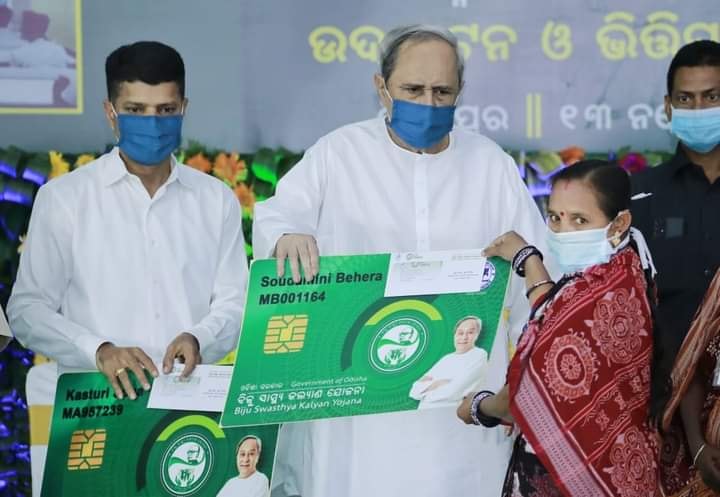
- Renaming the Legacy: By rebranding 21 state schemes (including replacing “Biju Swasthya Kalyan Yojana” with “Gopabandhu Jana Arogya Yojana”), the BJP is attempting to erase the “Biju” brand from the daily lives of Odias.
- The BJD Counter-Move: Naveen Patnaik has pivoted from “Development” to “Identity.” The BJD is now framing itself as the sole protector of Odisha’s interests against a “Delhi-driven” BJP, recently launching a membership drive that emphasizes Odia language and sub-nationalism.
3. Weaponizing the Tribal Identity
As Odisha’s first tribal CM, Majhi’s very presence is a threat to the BJD’s traditional vote bank in the hinterlands.
- The Mango Kernel Controversy: The BJD has found its first major opening in the tribal belt following the tragic “mango kernel” deaths in Kandhamal. Patnaik has used this to argue that the BJP’s focus on optics has led to the collapse of the food security net he built over two decades.
- Strategic Agitation: The BJD is no longer the “polite opposition.” It is now hitting the streets, focusing on tribal migration and the alleged “dilution” of the Special Development Councils (SDCs) that were Patnaik’s brainchild for tribal empowerment.
4. The Shadow of the ‘Heavyweights’
Interestingly, Majhi’s “commoner” status has given the BJD a unique challenge. While it was easy for Patnaik to spar with “national heavyweights” like Dharmendra Pradhan, it is politically risky to attack Majhi too harshly.
- The Trap: If the BJD attacks Majhi’s lack of experience, they risk looking elitist. If they ignore him, they allow him to build a “Modi-like” persona in the state.
The Verdict: A 100-Year War?
Naveen Patnaik recently declared that the “BJD will exist for 100 years.” This isn’t just a morale booster; it’s a recognition that the “Majhi Model” has successfully disrupted the BJD’s 24-year-old script.
The BJP has successfully transitioned from an “Urban/Western Odisha” party to a “Statewide/Tribal” force. For the BJD to make a comeback, it must do more than wait for anti-incumbency; it must find a way to out-Odia the BJP and out-grassroots the “Common Man” Chief Minister.
| FEATURE | THE NAVEEN PATNAIK MODEL (2000-2024) | THE MOHAN MAJHI MODEL (2024-Present) |
| Leadership Style | Remote & Enigmatic: Cultivated a “saint-like” distance from the public and media. Rarely spoke unscripted. | Accessible & Grounded: actively projects a “common man” image. Holds regular, open public grievance hearings. |
| Power Structure | Bureaucrat-Centric: High reliance on select bureaucrats (e.g., V.K. Pandian) for decision-making and program execution. | Party & RSS-Aligned: Power has shifted back to elected representatives and the party cadre, with a clear ideological alignment with the RSS. |
| Key Political Narrative | “Vikas Purush” (Man of Development): Focused on disaster management, industrial growth, and women’s self-help groups (Mission Shakti). | “Odia Asmita” & Tribal Pride: Emphasizes cultural heritage (Jagannath Temple), tribal identity, and a break from “outsider” influence. |
| Governance Focus | Welfare Populism: Built a massive, direct-benefit transfer network (KALIA, BSKY) to create a loyal beneficiary class. | Cultural Nationalism & Transparency: Prioritizes symbolic cultural acts (Ratna Bhandar audit) and anti-corruption measures in mining and administration. |
| Relationship with Centre | Constructive Cooperation: Maintained a policy of “equidistance” from national parties, often supporting the NDA on key issues for state benefits. | “Double Engine” Synergy: Operates in complete lockstep with the BJP central leadership, aggressively implementing central schemes. |
| Primary Criticism | “Over-Bureaucratization”: Accused of sidelining elected MLAs and creating an inaccessible layer of power between the CM and people. | “Inexperience & Dependence”: Criticized for a perceived lack of administrative experience and over-reliance on New Delhi for strategic direction. |
| Branding Strategy | The “Biju” Legacy: Almost all state schemes were named after Biju Patnaik to build a dynastic brand distinct from national parties. | De-Bijuization & Rebranding: Aggressively renaming state schemes (e.g., Gopabandhu Jana Arogya Yojana) to erase the BJD’s legacy. |
The Audacity of Identity: Why the ‘Majhi Moment’ is Odisha’s New Dawn
A Defining Editorial by Dr. Satya Brahma, Editor-In-Chief, Network 7 Media Group
“Politics, at its most potent, is not merely about who wins the seat of power; it is about who owns the narrative of a people’s soul. By bypassing the traditional heavyweights and placing the mantle of leadership on Mohan Charan Majhi, Narendra Modi has executed more than a tactical maneuver—he has launched a psychological revolution.
For decades, Odisha was governed by a sophisticated, elite-led consensus that prioritized stability over visibility. The ‘Majhi Moment’ shatters that glass ceiling. It tells every tribal child in the hinterlands of Keonjhar and Mayurbhanj that the corridors of Lok Seva Bhawan are no longer the exclusive domain of the pedigree or the bureaucracy.
While the titans—Pradhan, Panda, and Sarangi—remain indispensable architects in the national project, Majhi is the grassroots artisan. His elevation is a signal to the BJD that development without accessibility is a half-finished story. We are witnessing the birth of a new Odia era where Asmita (Identity) is no longer a slogan, but a living, breathing reality in the Chief Minister’s chair. The ‘Double Engine’ is now fueled by the raw aspiration of the common man.”
Key Takeaways from the Desk of Dr. Satya Brahma:
- On the BJD’s Crisis: “The BJD isn’t just fighting a party; it’s fighting a mirror image of what it used to be—connected and grassroots.”
- On the BJP’s Strategy: “Modi has traded ‘Star Power’ for ‘Street Power,’ a gamble that has fundamentally rewired the electoral chemistry of Eastern India.”
- On Odisha’s Future: “The transition from a ‘Bureaucratic Fortress’ to a ‘People’s Porch’ is irreversible. The era of the Enigmatic Leader is over; the era of the Empathetic Leader has begun.”
In this concluding feature for Network 7 Media Group, we move beyond the political optics to analyze the friction between the BJP’s “People’s CM” narrative and the reality of Naveen Patnaik’s enduring emotional shadow over Odisha.
The Shadow of a Titan: Mohan Majhi’s ‘People’s CM’ Narrative vs. the Naveen Patnaik Cult
For a year, the airwaves of Odisha have been thick with a carefully crafted propaganda: the image of Mohan Charan Majhi as the “accessible son of the soil,” a man who listens where his predecessor merely observed.1 But as the honeymoon period of the BJP’s historic win settles into the grit of daily governance, a more complex reality is emerging.
While Majhi occupies the office, Naveen Patnaik continues to occupy the state’s collective psyche. The BJP’s “People’s CM” tag is facing its toughest test: the unshakeable, silent devotion of a population that still views Patnaik not as a former politician, but as a guardian.
The Pandian Factor
• Behind-the-Scenes Influence: With Naveen Patnaik’s health visibly declining, many believe V. K. Pandian—the former bureaucrat turned political strategist—is the one calling the shots. Though not in the front line, his imprint on BJD’s decisions is unmistakable.
• Sidelined Cadres: Several party workers and leaders feel marginalized, arguing that Pandian’s dominance has reduced their relevance.
• Family Dimension: His wife, Sujata Pandian, retired from bureaucracy after BJD’s defeat, symbolizing a retreat from formal power but reinforcing the perception of a family-centered influence.
• The Big Question: Can Pandian emerge stronger? His organizational skills and proximity to Naveen give him leverage, but the lack of electoral legitimacy and resentment among sidelined leaders remain formidable obstacles.
The Propaganda of Accessibility
The BJP’s primary weapon against the BJD legacy has been the contrast in “reach.”
- The “Plastic Chair” vs. The “Ivory Tower”: Every image of Majhi sitting in a village or reopening the CM’s Grievance Cell is a deliberate strike at Patnaik’s later years, which were perceived as bureaucrat-locked.
- The Tribal Identity: By emphasizing Majhi’s Santali roots, the BJP has tried to frame him as the “true” Odia, implying that Patnaik’s 24 years were an era of “alien” governance.
The Reality Check:
However, Network 7’s ground reports suggest that “accessibility” does not always equate to “authority.” While people can now meet their CM, there is a growing murmur that the decisive, silent efficiency of the “Naveen era” is missing. The BJD has successfully framed Majhi’s frequent consultations with New Delhi as a loss of Odisha’s autonomy—a narrative that is beginning to sting.
Patnaik: The “Clean” Shadow
Contrary to expectations that the Biju Janata Dal (BJD) would crumble post-defeat, Naveen Patnaik’s popularity has remained curiously high.
- The ‘Victim’ Narrative: By attacking Patnaik’s health and his aides during the campaign, the BJP inadvertently created a “sympathy wave” that has outlasted the election.
- The Policy Benchmark: Every time a new Majhi-led scheme is announced, the public instinctively compares it to the “Biju” version. Patnaik’s move to decline the hiked MLA salary in late 2025 was a masterstroke of optics, reinforcing his image as a selfless statesman compared to a “politically hungry” BJP.
- The Mass Leader Paradox: In recent by-elections and public rallies, Patnaik’s presence continues to draw crowds that dwarf those of the current administration. The BJD is no longer a government, but it has transitioned into a powerful “emotional opposition.”
Majhi’s First Year: A Report Card of Friction
| BJP’s Narrative | The Ground Reality |
| “A CM for the Tribals.” | Tribal regions are seeing the first signs of unrest over land rights and mining, where Majhi is struggling to balance corporate interests with his “son of the soil” image. |
| “The End of Bureaucratic Rule.” | Critics argue the “Third Floor” (CMO) has simply traded Odia bureaucrats for “Delhi-appointed” advisors, leading to a perception of a remote-controlled government. |
| “Restoring Odia Asmita (Pride).” | Reopening the Jagannath Temple gates was a win, but the BJD’s counter-narrative—that BJP is “saffronizing” Odia culture—is gaining traction in rural belts. |
A Governance Gap?
The “People’s CM” title is a self-awarded badge that Mohan Majhi is working hard to earn. However, a leader’s stature is not built by the absence of his predecessor, but by the weight of his own legacy.
Mohan Majhi has successfully opened the doors of the secretariat, but he has yet to close the hearts of the people to Naveen Patnaik. As long as the “Naveen Niwas” remains the emotional pilgrimage site for millions, Majhi’s tenure will be viewed not as a new book, but as a difficult second chapter.
The propaganda is loud, but the silence of the Odia voter is louder. The battle for Odisha’s soul is far from over.
As we move into 2026, the political landscape of Odisha is witnessing a fascinating “clash of archetypes.” Based on current ground trends, here is the Network 7 People’s Ground Results Summary, breaking down how the Majhi administration’s first year has landed across the state’s distinct regions.
GROUND ANALYSIS: THE MAJHI MOMENT vs. THE NAVEEN SHADOW
A Network 7 Media Group Strategic Forecast
1. The Western Frontier: A BJP Fortress Solidifies
- Trend: The BJP’s “Double Engine” narrative has found its most fertile ground here.
- The Majhi Impact: As a leader from Keonjhar, Majhi is perceived as “one of their own” in the Western and Northern belts. His focus on increasing the paddy MSP (Minimum Support Price) to ₹3,100 per quintal has neutralized the BJD’s farmer outreach in districts like Bargarh and Sambalpur.
- People’s Rating: 8/10. The region sees him as the long-awaited answer to “Coastal dominance.”
2. The Tribal Heartland: Identity meets Reality
- Trend: A massive shift in the Scheduled Tribe (ST) vote, which was previously a BJD-Congress split.
- The Majhi Impact: Identity politics is winning. The elevation of a Santal CM has created a sense of “Adivasi Pride” that the BJD is struggling to counter with mere welfare. However, issues like mining displacement and forest rights remain “silent killers” that could dent his popularity if not addressed.
- People’s Rating: 7.5/10. High on symbolic pride, but under pressure for tangible forest-land delivery.
3. The Coastal Belt: The “Naveen Shadow” Lingers
- Trend: This remains the BJD’s “impenetrable” emotional stronghold.
- The Majhi Impact: In districts like Ganjam, Puri, and Cuttack, the “People’s CM” propaganda is often met with skepticism. Voters here are habituated to the “Naveen Brand” of quiet dignity. The replacement of the Biju Swasthya Kalyan Yojana (BSKY) with Ayushman Bharat is being viewed through a lens of “loss of state identity.”
- People’s Rating: 5/10. Majhi is seen more as a “BJP Representative” rather than an “Odia Icon” in these pockets.
4. The Women’s Vote: The Battle of the Century
- Trend: The most volatile and decisive demographic in Odisha.
- The Majhi Impact: The Subhadra Yojana (₹50,000 over 5 years) is a direct assault on Naveen Patnaik’s Mission Shakti base. Our analysis shows a “Split Loyalty”: older women remain loyal to “Naveen Babu,” while younger women (21–35) are pivoting toward the BJP for the promise of direct cash and modern aspiration.
- People’s Rating: 6.5/10. A work in progress that could go either way by the next Panchayat polls.
Mohan Majhi has successfully shifted the politics of Odisha, but he hasn’t yet fully shifted the culture. While the “People’s CM” tag is effective in Western Odisha and tribal belts, the Coastal heartland still treats him as a “temporary tenant” in a house built by Biju and Naveen Patnaik.
The Verdict: Majhi is winning on Aspiration, but Naveen is still winning on Affection.
The Shifting Sands of Odisha: A New Political Dawn
For over two decades, the political map of Odisha was painted in the steady, unyielding green of the Biju Janata Dal (BJD).1 But today, the wind blowing from the Bay of Bengal carries a different scent—one of seismic transition. The 2024 elections didn’t just change the government; they shattered a monopoly, signaling a profound shift in the Odia sub-national identity and the state’s democratic architecture.
The Saffron Surge: From Margin to Mandate
The rise of the Bharatiya Janata Party (BJP) in Odisha is not a sudden accident of history; it is the culmination of a decade-long “slow-burn” strategy. By successfully weaving together national aspirations with the threads of Odia Asmita (Odia pride), the BJP dismantled the BJD’s “fortress” image.
The party moved beyond its traditional strongholds in Western Odisha to dominate the coastal heartlands, fueled by:
- The “Outsider” Narrative: A potent campaign against the perceived dominance of non-Odia influence within the BJD’s inner circle.
- Cultural Resonance: Leveraging issues like the “missing keys” of the Jagannath Temple’s Ratna Bhandar to connect with the deep-seated spiritual consciousness of the electorate.3
- Aspirational Youth: For a generation that knew only one Chief Minister, the promise of “Double Engine” growth and job creation outweighed the comfort of existing welfare schemes.
The BJD’s Twilight: A Crisis of Succession and Soul
The decline of the BJD is perhaps the most poignant chapter in this saga. After 24 years of stability, the party finds itself at a crossroads. The loss was not merely of seats—dropping from 112 to 51 in the Assembly—but of its invincibility.
The cracks are now visible. Internal factionalism, long suppressed by the towering presence of Naveen Patnaik, has begun to surface. With the suspension of key MLAs and murmurs of a new regional outfit emerging, the BJD faces an existential question: Can it survive as a regional force without the absolute authority of its patriarch? The transition from a “ruling machine” to a “fighting opposition” has proven difficult, as the party struggles to redefine its identity in a post-Naveen era.
The Congress: The Phoenix or the Placeholder?
In the shadows of the BJP-BJD duel, the Indian National Congress is attempting a quiet but critical revival. For years relegated to the “third wheel” of Odisha politics, the party has shown glimpses of a pulse. Increasing its seat count to 14 in 2024 was a modest beginning, but the real momentum lies in the grassroots.
The Congress’s revival strategy is built on two pillars:
- Reclaiming the Secular-Socialist Space: As the BJP and BJD increasingly spar over the same right-of-center and regionalist voter base, a vacuum has opened for a party that champions tribal rights and agrarian distress.
- Structural Overhaul: With a focus on district-level leadership and internal transparency, the party is trying to shed its image as a “leaderless” entity.
However, the road is steep. The Congress must prove it is more than just a destination for BJD defectors; it must offer a compelling, modern vision for Odisha to win back a disillusioned middle class.
A Vibrant, Three-Cornered Future
Odisha is no longer a “stable” monolith. It has transformed into a dynamic, competitive laboratory of Indian democracy. The BJP now carries the heavy burden of incumbency and the challenge of governing a complex, culturally rich state. The BJD is fighting for its legacy and its life. And the Congress is looking to reclaim its lost heritage.
As the state moves toward the 2026 local elections, one thing is certain: the Odia voter is no longer a silent spectator. The era of predictable politics is over, and a new, more contested chapter has begun.
This research report examines the complex power dynamics currently reshaping Odisha’s political landscape, focusing on the influential Pandian couple and the existential crisis facing the Biju Janata Dal (BJD).
The Invisible Power: Decoding the Pandian Nexus
For over a decade, V.K. Pandian was more than just a private secretary; he was the primary architect of the Odisha government’s “5T” (Transparency, Technology, Teamwork, Time, and Transformation) framework. His wife, Sujata Pandian (Sujata R. Karthikeyan), was equally pivotal, leading the Mission Shakti department, which organized nearly 70 lakh women into self-help groups (SHGs).2
- The Power Couple: While V.K. Pandian managed the Chief Minister’s Office (CMO) and infrastructure, Sujata built a massive, grassroots loyalty base among women—a demographic that served as the BJD’s “silent vote bank” for years.3
- Voluntary Retirement: In a coordinated retreat following the BJD’s 2024 electoral defeat, both have now exited formal service. V.K. Pandian took voluntary retirement in October 2023 to join the BJD, while Sujata Karthikeyan followed suit, with her retirement becoming effective on March 13, 2025.
- The Shadow Influence: Despite V.K. Pandian’s public announcement of “withdrawing from active politics” in June 2024, reports from late 2025 and early 2026 suggest he remains a “surrogate” decision-maker. As Naveen Patnaik faces health challenges and spends significant time in Delhi, Pandian is still widely viewed as the person holding the “decree” over BJD affairs.
Why Naveen Patnaik Remains Mum?
The former Chief Minister’s silence regarding Pandian’s polarizing role is a calculated but risky political stance.
- Protective Barrier: Patnaik has consistently defended Pandian as a man of “integrity and honesty,” insisting he was an implementer of vision rather than a successor. By remaining mum on the “outsider” narrative, Patnaik avoids validating the BJP’s campaign that he has lost control.
- Lack of Alternative: After 24 years of centralized power, there is no “Plan B.” Patnaik’s silence reflects a deep-seated reliance on the only administrative and political machinery he trusts, even if that machinery is now a liability for the party’s public image.
- The “Dhritarashtra” Comparison: Critics and some disgruntled BJD veterans have begun comparing Patnaik to the mythological King Dhritarashtra—blind to the faults of his “Man Friday” while the party structure crumbles around him.
VK Pandian: Force or Diminishing Force?
V.K. Pandian’s current status is a paradox: he is administratively omnipotent but politically radioactive.
- A Force Within: He still controls the BJD’s strategy, communication, and internal resource allocation. As long as Patnaik is the party head, Pandian remains the gatekeeper.
- A Diminishing Force Externally: The “Outsider” (non-Odia) label has stuck. In the eyes of the electorate and the rising BJP, he is the symbol of why the BJD lost. His presence acts as a lightning rod for opposition attacks, making it difficult for the BJD to win back coastal voters.
The Future of BJD: The Succession Crisis
As of early 2026, the Biju Janata Dal is facing its most significant threat since its inception in 1997.
- Internal Rebellion: The party is currently battling “internecine conflict.” With Patnaik’s health being a major factor, senior leaders like Arun Sahoo and others have begun to voice discontent. The party has already seen suspensions of veteran leaders, signaling a breakdown in the once-monolithic discipline.
- The Split Risk: Without a clear, “son-of-the-soil” successor, the BJD is at high risk of a split. Analysts suggest that if a non-Patnaik (or a Pandian-backed) leader is forced upon the party, a large faction may defect to the BJP or attempt to form a new regional outfit.
- The Identity Vacuum: The BJD’s future depends on whether it can pivot back to its roots of “Odia Pride” without Naveen Patnaik’s personal charisma. Without him, the BJD risks becoming a “placeholder” party that slowly bleeds its cadre to a resurgent Congress and a dominant BJP.
 Pharma Leaders 2026 : Reimagining Healthcare – Powering Trust, Innovation & Global Impact
  The Earthquake in Tehran: Khamenei’s Death and the Shattered Chessboard
  From Generics to Genius: India’s Pharma Awakens to Global Leadership
  Shashi Tharoor Tears Into Union Budget 2026–27: “Promises Without Commitment”
  Union Budget 2026: Growth for Bharat, Relief Deferred!
  Budget 2026: Nirmala Sitharaman’s Tightrope Walk Between Growth and Justice